250 million years ago on the super continent Pangea dinosaurs started to appear. These supersized animals started out as little reptiles evolving over time, fostered by thriving ecosystems. The name dinosaur derives from the Greek words deinos, which translates to terrible, and sauros, meaning lizard or reptile.
But what classifies something as a ‘dinosaur’? A dinosaur is a type of Archosaur. Archosaurs include crocodiles, marine reptiles, pterosaurs, dinosaurs, and birds. They are mainly defined by their skeletal and skull structures. At first glance a dinosaur might look like a giant lizard. With scaly skin, a sluggish look, and when first depictioned had a dragging tail just like a lizard. Many early depictions of dinosaurs actually gave the illusion of them being giant lizards. Even with early misconceptions one of the biggest defining factors of dinosaurs was their posture. Early paleontology depicted them with outward facing legs just like a lizard but dinosaurs had their legs directly under them. Their unique hip sockets helped define this feature as well as the fused vertebrae around their hips creating the bir. Dinosaurs also had functional tridacyl feet, dinosaurs typically walked on three toes especially on their hind legs which helps distinguish them from modern reptiles.
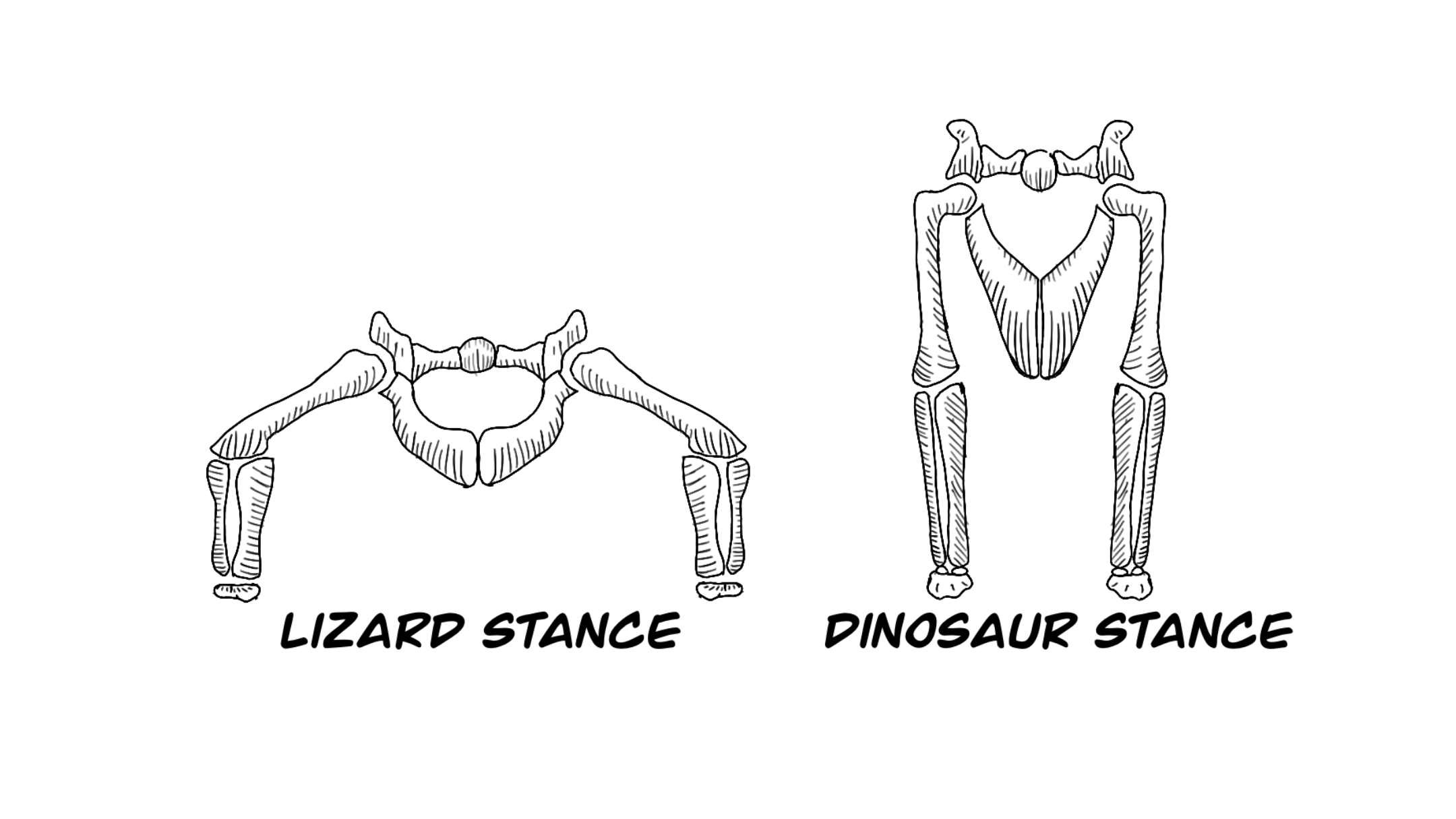
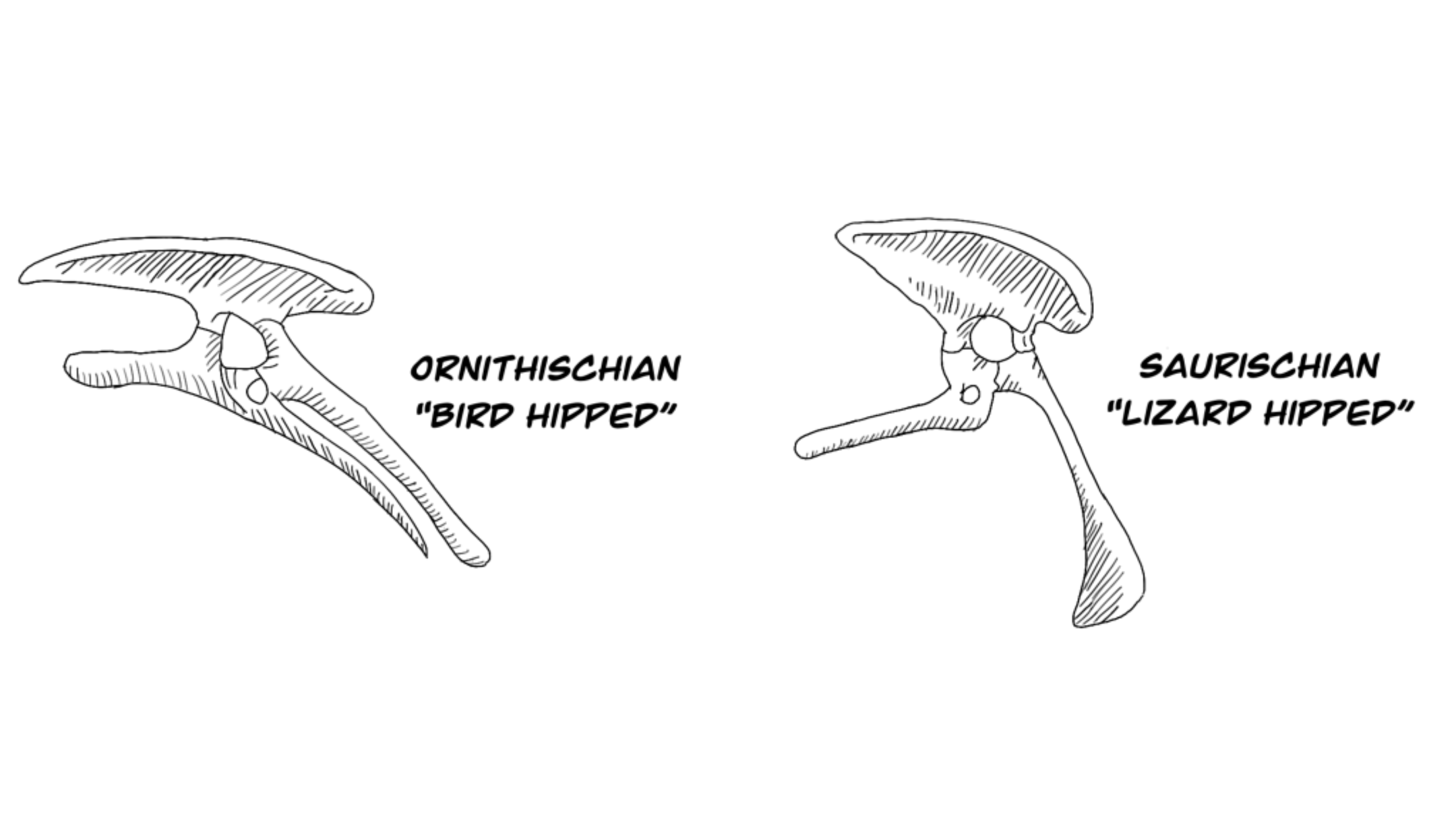
There are many different classifications and families of dinosaurs as well and they each have their own defining factors too. The two main categories of dinosaurs are Saurischians (saw-RISS-key-uhn) and Ornithischians (or-nun-THISS-key-uhn) which each have their own subfamilies as well. These two superorders have one major difference, their hip structures. Saurischians had a three pronged forward facing pubis, closer relating and resembling modern lizards whereas Ornithischians had a four pronged, backward facing pubis resembling closely to modern birds.
Saurischians
Saurischians are divided into two major subgroups, Sauropodomorphs (SOR-uh-POD-uh-morf) and Theropods (theh-ruh-paad). Theropods are typically carnivorous dinosaurs, some have broader diets, and are typically bipedal with the ‘lizard hip’ structure. Sauropodomorphs divide into two smaller groups, prosauropods (pro-SOR-uh-POD) and sauropods (SOR-uh-POD). Prosauropods are an earlier version of the ‘true’ sauropods; they often were bipedal and smaller than the ‘true’ sauropods. Sauropods otherwise known as the ‘true’ sauropods are giant quadrupedal herbivores, typically having a long tail and long neck. The biggest dinosaurs and species to ever roam this planet are found in this category.
Ornithischians
Ornithischians have three major categories which were purely herbivores, Marginocephalians (mar-JIN-o-seh-FAL-ee-uhn), Ornithopods (or-NITH-uh-POD), and Thyreophoerans (THIHR-ee-OF-o-ran). Marginocephalians divide into two groups Pachychephalosaurs (pa-chee-seh-fuh-luh-SORE) and Ceratopsians (serr-uh-TOP-see-uhn). Pachycephalosaurs leave paleontologists with the most mystery’s. These strange bipedal dinosaurs are known for their extremely thick sculls. Scientists believe they’ve evolved this strange feature to protect their brains from impact damage. The other major group of Marginocephalians are Ceratopsians; these quadruped dinosaurs have big bony frills extending from the top of their heads. Ornithopods are known for their successful evolution throughout the time of the dinosaurs. They range from small bipeadal runners to large semibipeadal and quadrupedal grazers, most notorious is their “duck bills” with heavy amounts of teeth. Finally the last major group of Ornithischians are the Thyreophorans which also divide into two smaller subgroups. The first subgroup are the Stegosaurs (steh-guh- SORE) which are most recognized for their rows of plates and spikes along their backs, with a quadropeadal stance and thick, strong spikes on the end of their tails they were a force to be reckoned with. The second group of Thyreophorans were also extremely powerful, the Ankylosaurs (an-KYE-low-SORE). They were quadropedal and stood low to the ground known for their armoured backs which commonly had spikes. Along with spikes most had a clubbed tail to help defend themselves.
 Earth Before Us
Leave a comment