Tye-ran-oh-SAW-rus-reks
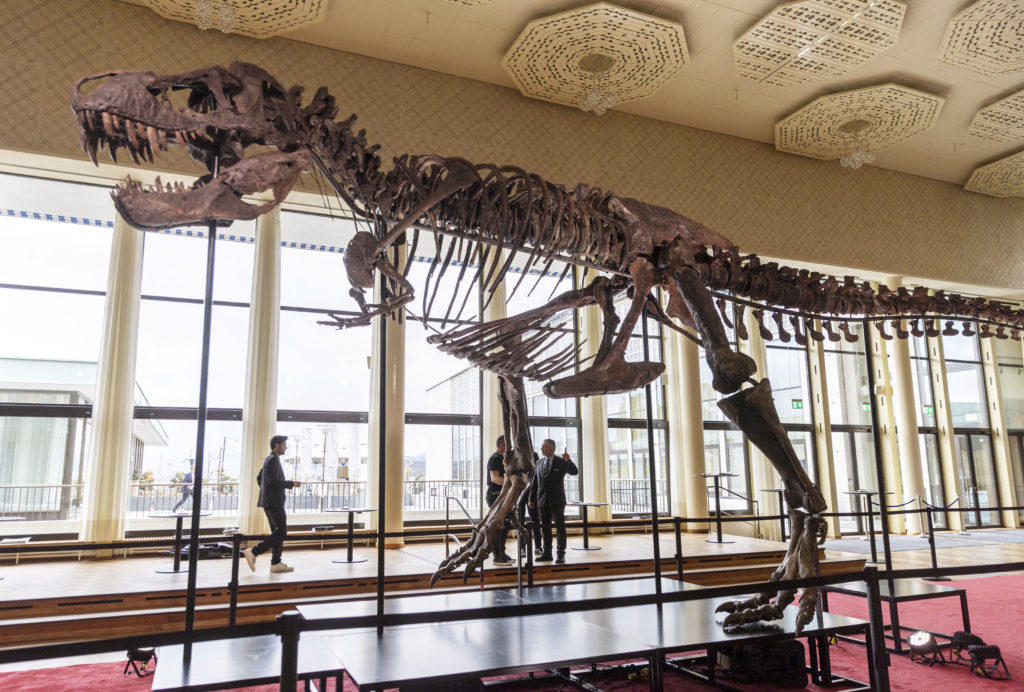
Scientific name; Tyrannosaurus Rex
Lived during the late Cretaceous period 66-67 MYA
Diet; Carnivorous was mainly a scavenger
Photo from PBS
About the Tyrannosaurus Rex
The Tyrannosaurus Rex, otherwise known as the T-Rex, was one of the most ferocious predators of the Cretaceous period, 66 million years ago. It lived in modern-day North America in the island continent called Laramidia. With a warm, humid, subtropical environment dinosaurs including the Tyrannosaurus Rex thrived. The Tyrannosaurus lived in a special environment featuring dense forests, coastal plains, and swamps resembling a modern floodplain. Even though the T-Rex was a very accomplished predator, the herbivores during the time were just as deadly. Due to misconception many people believe the T-Rex would take on big, fully grown dangerous herbivores like the triceratops but it actually played out very differently. The T-Rex was most likely a scavenger and prayed on the sick, wounded, or dying similar to the way modern predators hunt. Many fossils of Edmontosaurus, Triceratops, and other T-Rex fossils have been found with bite and puncture marks from the T-Rex. This suggests the Tyrannosaurus was a territorial species similar to the bengal tiger, living in solitude.
The T-Rex is one of the most misunderstood and misconceived dinosaur. When you think of a T-Rex you think of a large slow-moving theropod with rough scales, useless arms and poor vision. With modern discoveries it shows juvenile T-Rex’s had small feathers covering its body called protofeathers and likely lost them as they grew up. Protofeathers are small hollow feathers with a bristle like structure, sadly there are no living animals with protofeathers so we don’t know the exact purpose of them. T-Rexes were also believed to be slow moving but with scientists analyzing computer models, fossil trackways, and their skeletal structure they found out this 8 ton giant could most likely run up to 25 miles per hour (40 kilometers per hour). Even with being small, the Tyrannosaurs’ arms weren’t entirely useless, they were muscular and could, when close up, help hold onto prey and in a small amount could push themselves up from a resting position, off the ground. The final and one of the biggest myths about the T-Rex was its eyesight. With analyzing the dinosaurs skull, eye socket shape, brain case and comparing it to modern animals we learned the T-Rex had grapefruit sized, frontal facings eyes, with excellent depth perception it compared to that of a falcon.
We have found about 100 fossils of the T-Rex, ranging from about 50-90% complete. We have yet to find a complete fossil of the T-Rex missing major parts such as the distal limb bones, the phalanges, tail vertebrae, and very delicate skull elements such as the Sclerotic rings that supported the eye. Sue, Scotty, and Maximus are some of the most notorious T-Rex fossils that have been found. Each is about 90% complete with different parts missing. Finding a complete skeleton is exceedingly rare with most of the softer, fragile bones being lost to time and pressure. Even with T-Rex being one of the most famous dinosaurs is also one of the most missinterpreted.
 Earth Before Us
Leave a comment