BRACH-ee-uh-SAWR-us
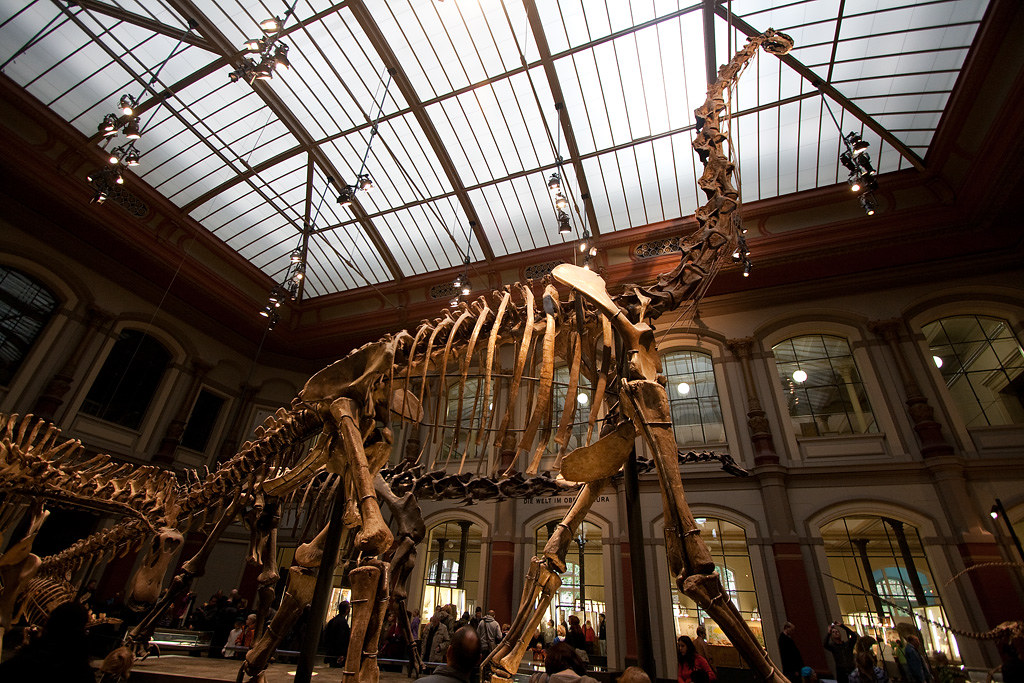
Scientific name; Brachiosaurus Artithorax
Lived during the late Jurassic period 154-145 MYA
Diet; Herbivore
Photo from Flickr
About the Brachiosaurus
Standing at a whopping approximate 50 feet (16 meters) the Brachiosaurus is one of the biggest sauropods we’ve discovered. But there’s one major problem, with about 14 vertebrae on the Brachiosaurus’ neck how did it stand? Some scientists think the Brachiosaurus’ neck was upright with thick muscles holding it up, similar to a modern-day giraffe. Others think the Brachiosaurus held its neck in front of it diagonal to the ground similar to other sauropods, the diplodocus is a great example of this. With a neck about 20 feet(6 meters) long and legs as tall as giraffes they most likely held their necks above them. The Brachiosaurus had a very unique leg structure. Its front legs were longer than the hind legs which helped solidify paleontologists beliefs of the Brachiosaurus holding its head above it.
Brachiosaurus has an instantly recognizable skull unlike most other sauropods, its nostrils were on the top of its head. This created a very unique skull shape and look to the Brachiosaurus. When its skull was first discovered it gave paleontologists many questions; What was this dinosaur’s anatomy, what caused this evolution and what was the Brachiosaurus’s environment like? The Brachiosaurus’ diet mainly consisted of ferns, conifers, and ginkgos. Its height helped avoid fighting other sauropods for food. They thrived in giant forests in modern-day North America which is not what people used to think. In earlier depictions of the Brachiosaurus it lived in swamps and mangrove forests staying in the water but with recent research we found they lived in warm, very lush forests.
Unlike some other dinosaurs paleontologists have limited knowledge of the Brachiosaurus, only about 12 fossils have been found of the Brachiosaurus. On top of there only being 12 discovered fossils, the most complete fossil we’ve found is only about 20% complete, which has given paleontologists even more of a struggle figuring out what this special dinosaur was like. Even with limited information paleontologists have worked around it and gave us a semi-realistic image of the Brachiosaurus.
 Earth Before Us
Leave a comment