Trai-seh-ruh-TOPS
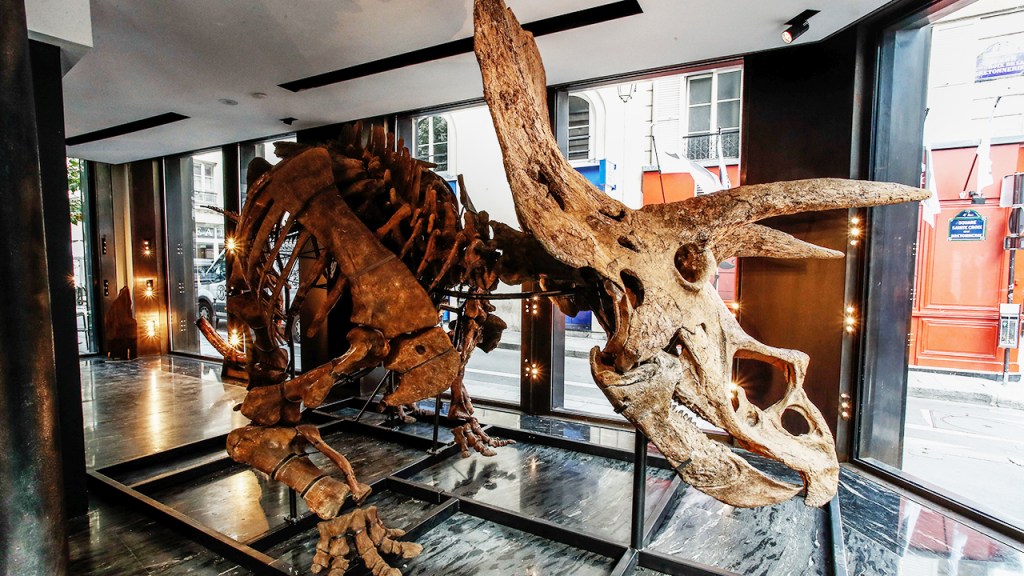
Scientific name; Triceratops Horridus
Lived during the late Cretaceous period 68-66 MYA
Diet; Herbivore
Photo from Fox
About the Triceratops
68 million years ago the ancestors of birds were thriving among millions of species of specially developed animals known as the dinosaurs. From the few fossils we have, we see how different and truly special these creatures are. Take for example, the Triceratops, one of the most special dinosaurs out there. It lives true to its name meaning three horned face, it has huge 4 foot tall horns protruding from the eyebrows of this dinosaur along with a smaller foot tall horn on the nose. The Triceratops lived with huge predators during its time such as the Tyrannosaurus and the Dakotaraptor; it needed a way to survive against these giant predators, sprouting the three famous horns. Along with horns, the Triceratops had a huge frill on the back of its head. Scientists aren’t entirely sure of the use of this frill but they assume it was most likely for sexual display, mating rivalry or even recognition among species.
The triceratops was a giant 10-foot tall quadrupedal monster of a dinosaur. Even though it solely ate herbs and plants, seeing an elephant-sized bulldozer with spikes on the front isn’t the most welcoming thing on the planet. The Triceratops generally lived in small close knit herds like most other ceratopsians. Scientists have found many fossils suggesting they lived in small herds. In 2013 a major expedition in Wyoming near the Naturalis Biodiversity Center unearthed 5 young-adult Triceratops fossils along with another site in 2009 that revealed three young Triceratops together suggesting this small herd behavior. Over 2,000 fossils have been found of this magnificent creature.
With finding many skin impressions of the triceratops we know almost everything about this animal. But, we don’t know the exact shape of the triceratops or the color. The biggest unanswered question and the one most hypothesized about is whether the Triceratops had hollow spines on the base of its tail. The Pastacosaurus had these spines on its tail which is an ancestor of the Triceratops. Many people speculate that since these two dinosaurs are related the Triceratops most likely had these hollow spikes on the base of its tail. Sadly we have no evidence to prove or disprove this hypothesis. This amazing creature is one of many of the extraordinary dinosaurs that used to live on this planet.
 Earth Before Us
Leave a comment